Most people who ask us this in the shop have a drug test coming up at work. Others just like to know what they’re putting in their body. Either way, there isn’t one number we can give you. It depends on how much you take, how often, what kind of product it is and a few things about you. For most people it’s hours to a few days. Regular users can carry traces for longer.
What “staying in your system” actually means
When scientists talk about how long something stays in the body, they usually use the term half-life. That’s the time it takes for the amount in your blood to drop by half. After about five half-lives, most of it has gone.
CBD’s half-life varies a lot depending on how it’s taken. A systematic review of human studies by Millar and colleagues (2018) found it ranged from around 1 to 11 hours after a mouth spray, about 24 hours when given by injection, around 31 hours when smoked, and 2 to 5 days when taken by mouth every day over a longer period. That’s a big spread, and it’s why nobody can give you one figure.
The other thing to know is that CBD is fat-soluble. It dissolves in fat rather than water, so some of it is stored in your body’s fat tissue and released slowly. That’s the main reason someone who takes CBD every day holds on to it for longer than someone who tries it now and then.
What affects how long CBD stays in your body?
How much you take and how often
Bigger amounts take longer to clear, and regular use lets CBD build up in your fat stores. If you have one 10mg gummy on a Saturday, it’ll likely be gone within a couple of days. If you’ve been taking oil every morning for six months, small amounts may hang around for a week or more after you stop.
The Food Standards Agency (FSA) advises healthy adults to keep to no more than 10mg of CBD a day from food products like oils, gummies and drinks. Staying within that also keeps the amount in your system modest. We’ve written more about it in How much CBD should I take?
Metabolism and body composition
Your liver does most of the work of breaking CBD down. People’s livers work at different speeds, and that’s partly down to genetics, age and any medication you take (some medicines use the same liver enzymes, which is one reason the FSA says anyone on medication should check with their GP or pharmacist first).
Body fat matters too. Because CBD is stored in fat, people with a higher body fat percentage can hold on to it a little longer.
Whether you’ve eaten
Taking an oil or capsule with a meal, particularly a fatty one, can increase how much CBD you absorb by several times compared with an empty stomach. Taylor and colleagues saw this in a 2018 study of healthy volunteers. More absorbed means more to clear. On an empty stomach, less gets in and it tends to pass through faster.
How active you are
Very active people tend to have less body fat and burn through their fat stores faster, so CBD may clear a little quicker for them. There isn’t much research on this, so don’t read too much into it.
How long CBD stays in your system, by product type
How you take CBD changes how quickly it gets into your bloodstream and how long it stays there.
| Product | How it gets in | Rough picture |
|---|---|---|
| Oil (under the tongue) | Partly through the lining of the mouth, the rest swallowed | Hours to a few days, longer with daily use |
| Gummies and edibles | Through the digestive system | Slower in, generally cleared within days |
| Vapes | Through the lungs | Quickest in, quicker out, but builds up with regular use |
| Creams and balms | Stay on the skin | Very little reaches the blood |
How long does CBD oil stay in your system?
Drops held under the tongue for a minute get partly absorbed through the lining of your mouth, and whatever you swallow goes through your gut. A single dose will usually be well on its way out within a day or two. Take it daily and it builds up, so expect it to linger for several days after you stop. Our CBD and CBG oils all have the strength per bottle and per drop on the label, which makes it easy to keep track.
How long do CBD gummies stay in your system?
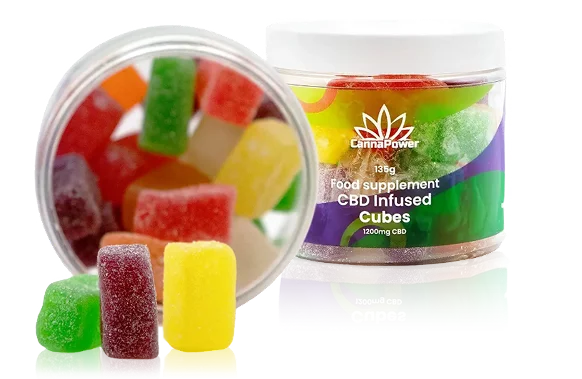
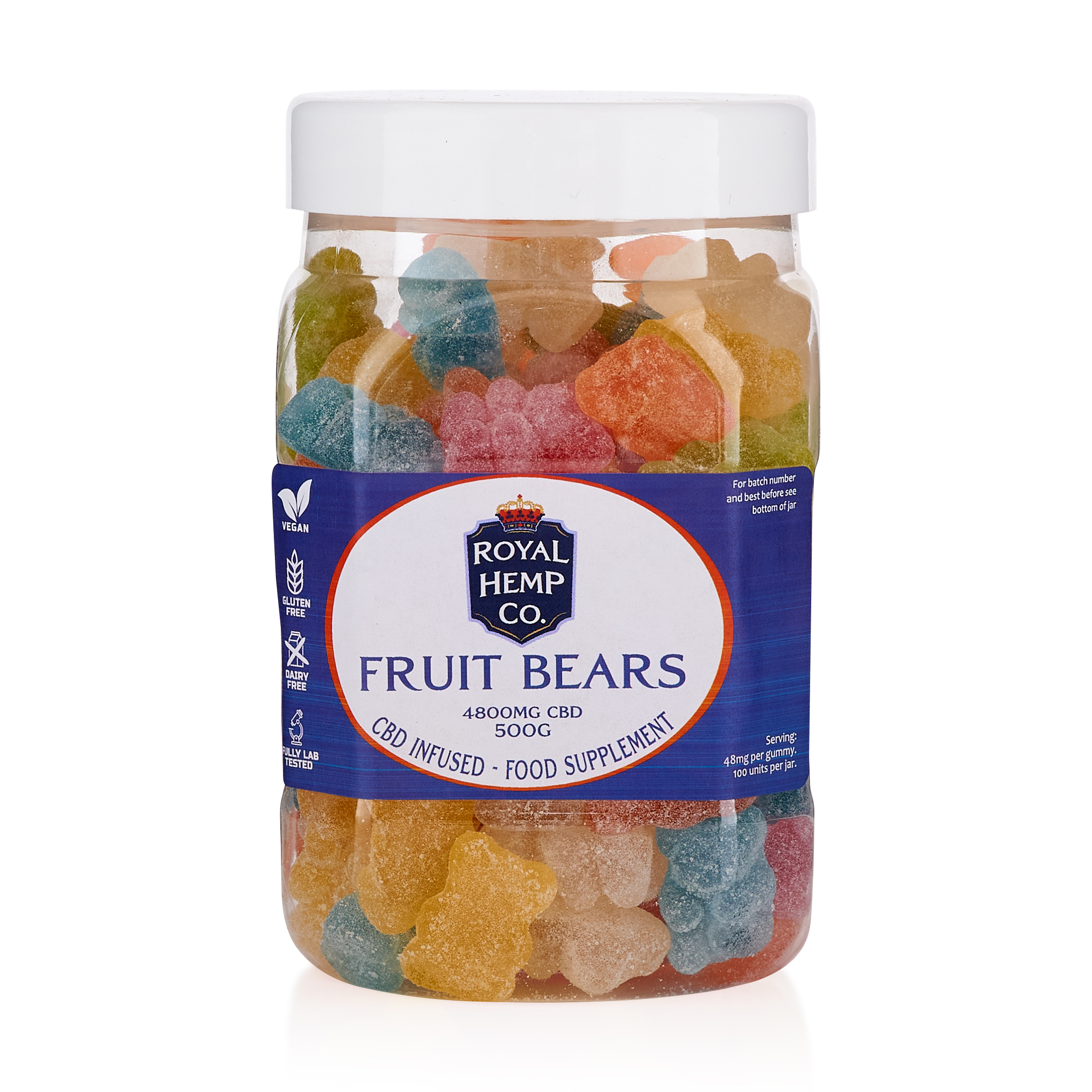
Gummies have to be digested before anything reaches your bloodstream, so they’re slower to come through than oil. Once absorbed, they behave much like any other CBD you swallow. Occasional users will usually have cleared them within a few days. What people like about gummies is that each one has the same amount in it, so you always know what you’ve had. Have a look at our CBD gummies if that appeals.
How long does a CBD vape stay in your system?
Vaping takes CBD into the lungs, where it passes into the blood quickly. It also leaves relatively quickly, though heavy daily vaping will still lead to some build-up in fat tissue. Our vape cartridges list the total CBD (and CBG) in each cartridge.
How long does CBD skincare stay in your system?
Creams and balms are made to sit on and in the skin, not to get into your bloodstream. Very little, if any, reaches your blood, so this is the format least likely to stay in your system. If that’s your main concern, our CBD skin care range is the one to look at.
Will CBD show up on a drug test?
Standard workplace and roadside drug tests look for THC (or the substances your body turns THC into), not CBD. So pure CBD on its own shouldn’t trigger a positive result.
But some CBD products contain small amounts of THC, especially full spectrum ones. In the UK, a legal CBD product can contain no more than 1mg of THC (and other controlled cannabinoids) per container. That’s a tiny amount, but if you use a product every day for a long time, it’s possible for traces to build up. Independent testing has also shown that not every product on the market contains what its label says. The Centre for Medicinal Cannabis tested 30 CBD oils in 2019 and found that 45% had measurable THC.
Nobody can promise you’ll pass a drug test. If you’re tested for work, driving or sport, our advice is:
- choose broad spectrum or isolate products, which have the THC removed;
- check the lab report (certificate of analysis) before you buy, not after;
- speak to your employer or sporting body first, as some have zero-tolerance rules.
Isolate, broad spectrum or full spectrum?
The type of CBD extract you buy has a bigger effect on drug test risk than how long the CBD itself stays in your body.
CBD isolate
This is CBD on its own, with everything else from the plant removed, THC included. If THC is your worry, this is the cleanest choice, and it makes measuring your intake easy.
Broad spectrum CBD
Broad spectrum keeps a range of the plant’s other compounds, such as terpenes and minor cannabinoids, but has the THC filtered out. There can still be the faintest trace, so it’s not an absolute guarantee, but it’s a sensible middle ground. Most of our broad spectrum oils fall into this group.
Full spectrum CBD
Full spectrum keeps everything from the hemp plant, including a small amount of THC. Some people prefer it for the fuller hemp profile. If you shop around online you’ll often see “under 0.3% THC” quoted. That’s a US rule and it doesn’t apply here. In the UK the rule is the 1mg per container limit, so always check a product is sold legally in the UK and has a lab report you can read. See our full spectrum oils for the ones we stock.
FAQs
How long does it take for CBD to leave your body after one dose?
For a single, modest dose, most of it will have cleared within a day or two. Traces can take a little longer, depending on the factors above.
Does CBD build up if I take it every day?
Yes, to a degree. Because CBD is stored in fat, daily use leads to some build-up, which is why regular users hold on to it for longer. Keeping within the FSA’s 10mg a day advice keeps that build-up small.
Can I speed up clearing CBD from my body?
Not in any reliable way. Stopping is the main thing. Drinking water, exercising and eating well are good for you anyway, but there’s no proven way to flush CBD out faster.
Is it safe to drive after taking CBD?
CBD itself isn’t intoxicating, but UK drug-driving law sets a very low legal limit for THC in the blood. If you use a product that contains any THC, bear that in mind, and don’t drive if you feel drowsy for any reason.
Where can I check what’s in your products?
Every product page on our site links to its lab report, and you’re welcome to ask to see them at our shop in the Stables Market, Camden. We’re open every day from 11am to 7pm.
This article is general information, not medical or legal advice. Our CBD products are sold as food supplements or cosmetics, not medicines, and are not intended to diagnose, treat, cure or prevent any disease. If you’re pregnant, breastfeeding, trying to conceive or taking any medication, speak to your GP or pharmacist before using CBD.
References
- Millar S.A. et al. (2018). A systematic review on the pharmacokinetics of cannabidiol in humans. Frontiers in Pharmacology, 9: 1365. https://doi.org/10.3389/fphar.2018.01365
- Taylor L. et al. (2018). A phase I, randomized, double-blind, placebo-controlled, single ascending dose, multiple dose, and food effect trial of the safety, tolerability and pharmacokinetics of highly purified cannabidiol in healthy subjects. CNS Drugs, 32: 1053–1067. https://doi.org/10.1007/s40263-018-0578-5
- https://pmc.ncbi.nlm.nih.gov/articles/PMC4189631/
- https://pmc.ncbi.nlm.nih.gov/articles/PMC9146469/
- Food Standards Agency (2023). Updated consumer advice on CBD: 10mg a day for healthy adults. https://www.food.gov.uk/safety-hygiene/cannabidiol-cbd
- Home Office. Drug licensing factsheet: cannabis, CBD and other cannabinoids. https://www.gov.uk/government/publications/cannabis-cbd-and-other-cannabinoids-drug-licensing-factsheet
- Centre for Medicinal Cannabis (2019), reported by NORML: CBD products available in the UK often mislabelled. norml.org
- GOV.UK. Drugs and driving: the law. https://www.gov.uk/drug-driving-law